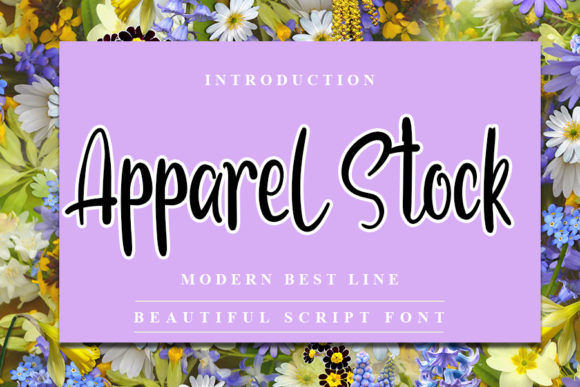
Apparel Stock: The Font That Boosted My Bakery’s Brand
I run a small bakery called Maple & Co. For years, I’ve been juggling the daily grind of baking, managing orders, and keeping up with social media. But one thing I never really thought about was how my brand looked on paper—until I realized that every label, menu, and thank-you card I printed felt like a missed opportunity.
My packaging had a kind of charm, but it lacked consistency. Some labels were bold and playful, while others were too plain or even confusing. I wanted something that would tie everything together—something that felt natural, warm, and just a little bit special. That’s when I discovered Apparel Stock.
A Font That Feels Like a Friend
Apparel Stock is a handwritten font with a sweet and natural vibe. It has this gentle curve to it, like someone wrote it with care and intention. It’s not too fancy, not too casual—it’s right in the middle of what feels authentic and approachable. When I first saw it, I knew it could be the perfect fit for my bakery.
I started by testing it on our product labels. Before, we used a mix of fonts that made the designs feel disjointed. Now, with Apparel Stock, everything looks cohesive. Our chocolate chip cookies have a tag that reads “Handmade with Love” in Apparel Stock, and it feels like a personal touch from the baker to the customer.
From Packaging to Social Media
Apparel Stock isn’t just for labels. I began using it on our website banners, social media graphics, and even our thank-you cards. It works well for headlines, short phrases, and decorative accents. On Instagram, I use it for the titles of our daily specials, and it adds a nice visual rhythm to the feed.
One of my favorite uses has been for our seasonal menus. Last fall, I redesigned our café menu with Apparel Stock as the main typeface. It gave the menu a warm, inviting look that matched the cozy atmosphere of our shop. Customers commented on how much more inviting the new design felt, and I couldn’t help but smile.
But it’s not just about aesthetics. Typography plays a big role in how customers perceive your brand. A clean, consistent font like Apparel Stock helps build trust and makes your brand feel more professional. It’s subtle, but it matters. People remember brands that look good, and they’re more likely to come back.
Readability Matters
I know some people worry about readability, especially when using a script or handwritten font. I did too at first. But with Apparel Stock, I found that it works well on both print and digital formats. On our packaging, it’s clear and easy to read, even in smaller sizes. And on mobile screens, it holds up nicely, which is important for our online store.
If you’re using it for small labels or tags, I recommend pairing it with a clean sans serif font for contrast. That way, your text remains legible without losing its personality. For example, I use a simple sans serif font for the price tags, while Apparel Stock handles the product names and descriptions.
Font Pairing Tips
Pairing fonts can make a huge difference in your design. I’ve found that Apparel Stock pairs well with elegant serif fonts for a classic feel or modern sans serif fonts for a fresh, contemporary look. It also works beautifully with other script fonts for a layered, decorative effect.
When choosing a font pairing, always consider the purpose of your design. If you’re creating a logo, you might want a bolder weight or alternate style. For packaging, you’ll want something that’s readable at a glance. And for social media graphics, keep it simple and eye-catching.
Getting Started with Apparel Stock
Before jumping into a project, I always check the font details. With Apparel Stock, I found that it comes with multiple weights, alternates, and ligatures, which gives me more flexibility. It also supports multilingual characters, which is great if you plan to expand your brand internationally.
Make sure to review the commercial font licensing before using it on products, packaging, or client work. Knowing what you’re allowed to do will save you from any unexpected issues down the line.
Now, when I create new designs, I think about how each element contributes to the overall brand identity. From the moment a customer sees our packaging to the time they scroll through our Instagram feed, every detail matters. And with Apparel Stock, I feel like I’ve found the perfect tool to bring all those pieces together.